

The Multiple Eastern Questions - An LLM Analysis
By Dimitrios Thomakos
At the Cybernetics and Artificial Intelligence Laboratory, we are constantly exploring how advanced analytical frameworks can illuminate complex global challenges. Our latest research delves into the intricate dynamics of nuclear risk and evolving geopolitical landscapes, synthesizing classical strategic thought with contemporary intelligence to forge a robust methodological approach. This work has not only yielded a comprehensive assessment of nuclear conflict probability but also uncovered a profound 200-year historical pattern in great power competition: the "Geographic Imperative Principle," demonstrating how strategic geography consistently overrides religious and cultural solidarity in shaping international relations.
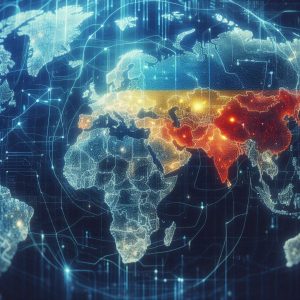
This rigorous analysis extends to a "Multiple Eastern Questions" framework, identifying three simultaneous geopolitical flashpoints across Europe, the Mediterranean, and the Pacific. Our forecasts, calibrated with a systematic confidence methodology, predict a prolonged conflict in Ukraine and a global partitioning into distinct blocs by 2035. Such deep pattern recognition and predictive modeling of complex adaptive systems are at the heart of cybernetics and AI. This research exemplifies how structured, data-informed approaches can provide critical foresight into an increasingly uncertain world, laying groundwork for future computational models that could further enhance strategic understanding and decision-making.
