


Pantelis Koutroumpis
Director Oxford Martin Programme on Technological and Economic Change, Oxford University
Pantelis Koutroumpis
LinkedIn Profile: https://www.linkedin.com/in/pkoutroumpis/
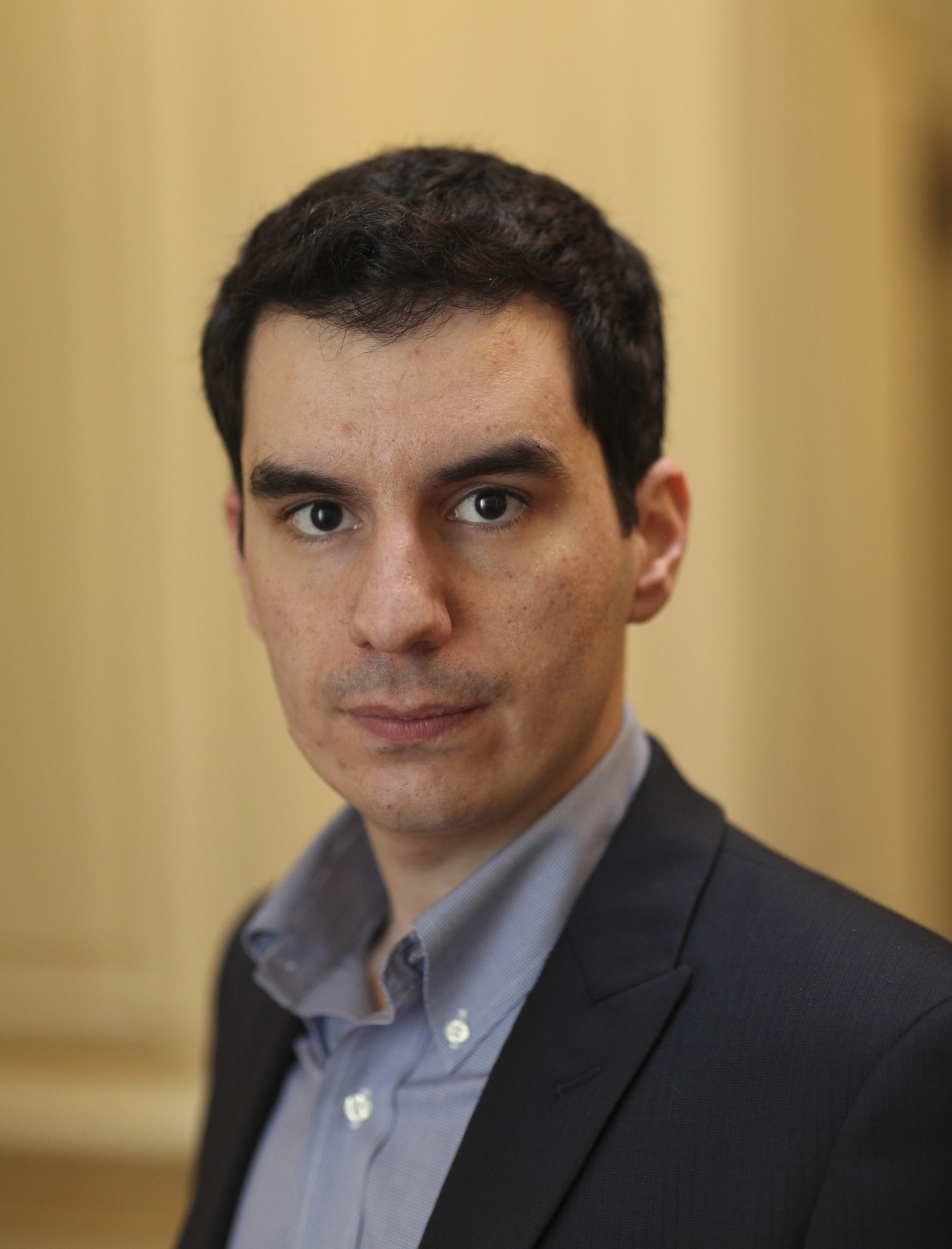
PhD in Economics
Professional Summary
Pantelis Koutroumpis is an academic and economist specializing in public policy, industrial economics, and technology regulation. Since 2018, he has served as the Director of the Oxford Martin Programme on Technological and Economic Change at Oxford University. He is also a Senior Research Fellow at the Institute of New Economic Thinking (Oxford) and a Senior Advisor at St Anthony's College.
His research focuses on the economic impact of digital infrastructure, productivity, and artificial intelligence. He has published extensively in leading journals such as the Journal of the European Economic Association, Nature Scientific Data, and the Journal of Economic Literature. His work is frequently cited in major media outlets like the Financial Times, Wired, and Nature.
Pantelis' recent work applies the tools of industrial economics and regulation to the emerging challenges posed by Artificial Intelligence. A central strand examines the vertical structure of the AI supply chain — from compute and frontier models to inference services — and how upstream market power interacts with safety externalities to shape downstream welfare. Using public procurement data for the UK government, he provides empirical evidence showing that soft/informational interventions are insufficient to reduce concentration in cloud infrastructure, whereas binding conduct remedies under the Digital Markets, Competition and Consumers Act are gradually taking effect. A separate line of research provides the first systematic economic analysis of AI-related litigation, drawing on cases that document a "copyrights wall" of unresolved training-data disputes and a cumulative "litigation tax" of approximately 1.7–2% of annual global AI venture capital investment, formalizing how legal uncertainty functions as both a price-discovery mechanism for missing data-rights markets and a regressive barrier to competitive entry.
Besides the regulatory aspects, he also focuses on the governance and assessment challenges that arise as AI systems are delegated increasingly complex cognitive tasks. Drawing on delegation theory and mechanism design, he co-develops a framework for understanding the "Measurability Gap" — the structural divergence between the falling cost of automated execution and the naturally constrained cost of human verification. This taxonomy of six failure modes reveals a systematic misalignment: engineering investment concentrates where harm is absent, while the failure modes that generate real-world damage remain largely unaddressed. This work extends to cybersecurity, where he models attacker costs as endogenous to the regulatory regime and shows how the UK Cyber Security and Resilience Bill can operationalise deterrence by raising the expected costs of attack across the supply chain.

Values: Foundations in Interdisciplinary Excellence
Our laboratory is rooted in the synergy between cybernetics-the science of communication and control in systems-and artificial intelligence. We uphold:

Mission: Advancing Intelligent Systems for Societal Good
Our laboratory exists to pioneer innovations that harmonize theoretical depth with real-world impact.

Vision: A Future of Symbiotic Intelligence
We envision a world where AI and cybernetic systems empower humanity to tackle existential challenges while preserving dignity and diversity.
